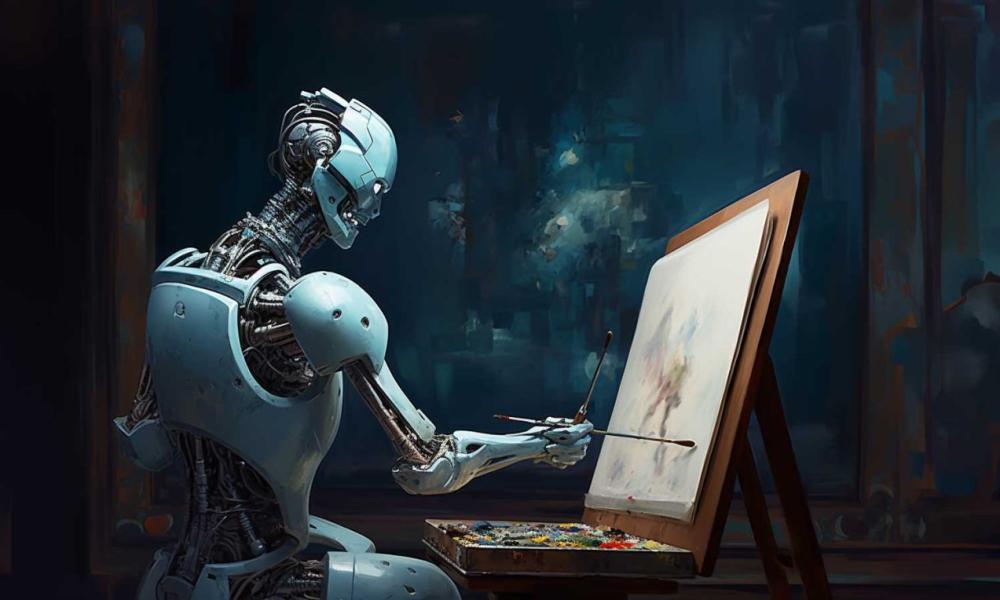
A Deep Dive into AI Artwork
AI-generated artwork has exploded in popularity, leading to a big, messy, and frankly, uncomfortable conversation in the art world. While AI can create unique images in seconds, raising the "cool" factor, it also presents fundamental questions about creativity, originality, and the true meaning of being an graphic artist.
Let's break down the advantages and disadvantages of AI art and examine its place in a world that craves authentic human creativity.
Pros of AI Art
1. AI Accelerates Idea Generation
Creative block is a common hurdle, but AI offers a powerful way to jumpstart the process. With simple prompts, artists can generate an endless flow of compositions, color schemes, and concepts to build creative momentum.
- Instant Visual References: Skip hours of searching; AI generates multiple ideas in seconds, sparking new directions immediately.
- Rapid Sketching: Artists can quickly test various layouts and composition sketches before committing to a final, detailed piece.
- Fresh Perspectives: AI excels at blending unexpected elements, leading to novel viewpoints that an artist might not have considered alone.
This ability to eliminate creative blocks and offer infinite possibilities for experimentation is a major advantage.
2. Lowers the Barrier to Visual Creation
Not everyone has the time or training to master traditional painting, drawing, or digital illustration. AI makes it easier for non-artists—from small business owners needing graphics to individuals seeking personal enjoyment—to create visually appealing work.
This accessibility is positive because It allows more people to express themselves creatively. Playing with AI art can sometimes inspire a person to try creating by hand. Small businesses and entrepreneurs can create visuals without hiring a designer. It removes technical barriers that often discourage beginners.
3. Excellent Tool for Brainstorming
For professional creatives, AI is an effective brainstorming and experimentation tool. It can instantly suggest color palettes, generate variations on a concept, or test different compositions without the commitment of a final piece. This is especially helpful when exploring unfamiliar styles or seeking new inspiration.
The key is to use AI as an enhancement tool, not a replacement for the creative process. It functions best when paired with human intention and artistic skill, rather than relied upon to do all the creative heavy lifting.
Cons of AI Art
While AI offers benefits, there are major, unavoidable concerns.
1. Loss of Personal Touch and Originality
One of the most significant arguments against AI art is its lack of soul. Human-made art embeds the creator's personality, emotions, and imperfections into every brushstroke. AI, however, simply pulls from existing images, rearranges pixels, and produces a visually appealing result without the heart, frustration, or satisfaction of the human creative experience.
2. Algorithmic Limitations on Creativity
AI operates within a set of rules, designed to recognize patterns and trends. This often leads it to default to what is already familiar or popular. For artists who push creative boundaries, AI-generated work can feel limiting. True groundbreaking artwork happens when people take creative risks, which an algorithm cannot do.
3. Legal and Copyright Controversies
This is the trickiest issue. AI models are trained on massive datasets, often including copyrighted work scraped from the internet without the original artists' permission. This raises severe questions:
- Ownership: Who owns the final piece? The person who typed the prompt or the original artists whose work was used as data?
- Consent and Compensation: Many artists are unaware their work was used to train AI, raising questions about fair compensation.
- Legal Gray Area: Copyright laws have not caught up with the technology, leaving ownership of AI-generated images legally ambiguous.
- Shifting Authorship: If AI does most of the work, the concept of artistic authorship—where the role of the artist begins and ends—is fundamentally shifting.
4. Significant Environmental Impact
The energy consumption required to train and run large AI models is a serious concern. These models rely on powerful data centers that use vast amounts of electricity and water for cooling. The carbon footprint of training a single large AI model can be shockingly equivalent to the lifetime emissions of multiple cars.
5. Job Displacement for Artists
With AI tools churning out logos, illustrations, and paintings in seconds, there is a growing risk of companies replacing human artists with machines. This not only eliminates jobs for designers and illustrators who spent years honing their craft but also devalues the originality and human effort poured into creative work.
6. Art is Not Meant to Be "Efficient"
The speed of AI art is a major selling point, but art itself is not meant to be efficient. The creative process is often slow, messy, meditative, and deeply personal. The act of creation mixing colors, experimenting, and embracing happy accidents is rewarding and healing in ways AI can never replicate. Prioritizing convenience risks losing the deeper, intrinsic benefits of truly engaging with the creative process.
AI Art in Professional Sign Making: A Cautionary Tale
AI-generated artwork is generally unsuitable for professional sign shops due to unreliable quality, major legal complications, and technical limitations. Professional sign printing demands high-resolution, precise, and legally sound files, which AI outputs often fail to provide.
Unreliable Image Quality
- Low Resolution: AI images are often generated at low resolutions (e.g., 1024 x 1024 pixels). When enlarged for a sign, the image becomes pixelated, fuzzy, and unusable.
- Gibberish Text: AI generators notoriously struggle with rendering legible text, resulting in jumbled, nonsensical characters that cannot be used on a professional sign.
- Inconsistent Details: Close inspection often reveals distortions—such as "melted" backgrounds or warped objects—that reflect poorly on a brand.
- Lack of Clean Vectors: Sign makers require scalable vector graphics (.AI, .EPS) for precision. AI typically generates raster images (.JPG, .PNG), which blur when enlarged.
Legal and Copyright Risks
- Unclear Ownership: Since works created solely by AI lack human authorship, the U.S. Copyright Office has ruled they cannot be copyrighted, meaning the output is essentially public domain and usable by competitors.
- Infringement Risk: Training on copyrighted datasets creates a significant risk that an AI image may unknowingly infringe on an existing copyrighted work, potentially opening the sign shop and client to a lawsuit.
- Trademark Violation: AI can inadvertently mimic or include trademarked logos, a serious commercial risk.
Lack of Professional Context
- Weak Brand Storytelling: A human designer works to understand a brand's values. AI processes prompts based on patterns, often resulting in a generic, shallow image that fails to convey a unique brand identity.
- No Strategic Partnership: A human designer offers consultation and revisions for long-term brand evolution; AI delivers a static product.
When AI Art Can Be Used
AI artwork can serve as a starting point, but not a final product. Sign shops may accept it only if:
- Substantial Human Modification has been made to the base AI image.
- A human designer has performed Manual Vectorization to create a clean, print-ready file.
- The client provides Confirmation of Rights, ensuring a model trained exclusively on licensed or public-domain content was used, eliminating infringement risk.
Conclusion: AI Is a Tool, Not a Replacement
Ultimately, AI art's value depends entirely on how it is used. It is a powerful tool for generating ideas and enhancing traditional work, but it is not a replacement for the skill, intuition, and originality that define human creativity.
For those looking to create art that no AI can replicate, the focus must be on honing a unique, personal style—an experience that involves mixing colors, feeling the brush, and making intuitive decisions, which an algorithm can never truly replicate.